
Schiphol Delays & EES Chaos: What You Need to Know This Summer
Categories: Latest News,News from the Netherlands,Travel
Ah, the joys of international travel. You’ve packed your bags and double-checked that you actually brought your passport to Schiphol. You step off the plane, stretch your legs, and you march toward passport control. Then you see it. You’ve just walked into the new reality of Schiphol delays for non-EU travelers at Schiphol, where waiting times at passport control have ballooned to two hours at peak times.
If you’re asking yourself why your quick weekend trip just got slapped with a 120-minute pit stop, let’s jump into the reasons behind Schiphol’s latest queueing saga.
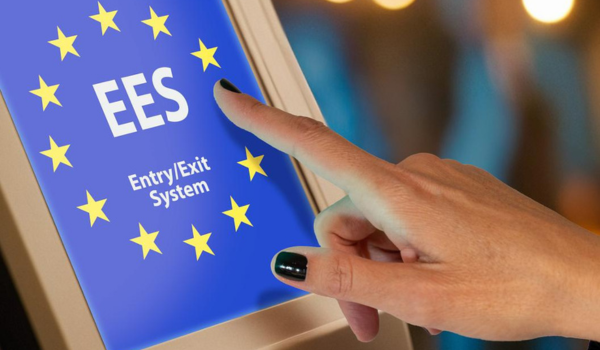
The Culprit: Meet the EES (European Entry Exit System)
The EES (European Entry Exit System) is in effect at 29 Schengen borders. However, it does not cover flights within Schengen, and it does not include Ireland or Cyprus. The setup was created to modernize the border, pushing the Schengen Zone toward the future by replacing those cherished ink stamps in your passport with a sleek digital ledger.
Under the EES, non-EU citizens must now log their passport details and biometric information when they first cross an external Schengen border after 10 April 2026; yes, we’re talking fingerprints and facial scans too. The aim is pretty straightforward: it helps border control compute, very precisely, how long a traveler has been roaming around the Schengen Zone.
On paper, it sounds neat, but in real life, pulling biometric data from thousands of tired, jet-lagged passengers often goes the way you think it will, creating massive Schiphol delays.
If you’re planning to stretch that stay well past a short holiday, it’s worth brushing up on how the Netherlands’ permanent residence rules work, since a Dutch residence permit changes how the EES treats you at the border entirely.

How These Schiphol Delays Might Affect You
Suppose you’re one of the categories below.
Scenario 1: John (US Passport, Tourist)
Leaving Schiphol: John scans his US passport at exit control. Because his biometrics were captured when entering Schengen, EES quickly matches his face to his file and logs his departure timestamp to verify he hasn’t overstayed his 90 days.
Returning to Schiphol: John joins the non-EU queue. At passport control, the EES scans his passport and face, matches his profile, and records his new Schengen entry. During peak hours, this biometric verification process contributes to the lengthier queues.
Scenario 2: Adam (Dutch Passport, EU Citizen)
Leaving Schiphol: Adam is completely exempt from EES. He scans his Dutch passport at the automated EU eGates and passes through exit control in seconds.
Returning to Schiphol: Landing back in Amsterdam, Adam completely bypasses the long EES biometric lines. He heads straight to the EU eGates, scans his passport, and enters the Netherlands instantly without any fingerprinting, facial scans, or Schengen entry logging.
Scenario 3: Sarah (UK Passport + Dutch Residence Permit)
Leaving Schiphol: Sarah is exempt from EES biometric logging because she holds Dutch residency. She shows her UK passport and physical Dutch residence card to the officer, who clears her without logging an EES tourist exit.
Returning to Schiphol: Back in Amsterdam, Sarah avoids the EES tourist queue. She presents her UK passport alongside her Dutch residence permit at border control. The officer verifies her residency, allowing entry without taking fingerprints or deducting days from a 90-day allowance.
Residents like Sarah rarely think about their permit again once it’s issued, but it’s still worth keeping a digital backup, since a lost residence permit in the Netherlands can turn a routine border crossing into a genuine headache.
Scenario 4: David (UK Passport, Tourist)
Leaving Schiphol: Departing Schiphol, David presents his UK passport at exit control. The EES scans his passport, matches his face to his biometric profile, and logs his exit from Schengen.
Returning to Schiphol: Arriving back in Amsterdam, David joins the non-EU queue. At border control, officers scan his UK passport, capture his facial photo, and verify his fingerprints. The EES logs his entry to calculate his 90-day limit, leaving him exposed to long peak-hour queues.
Scenario 5: Priya (Indian Passport + Dutch Residence Permit)
Leaving Schiphol: Priya is exempt from EES tracking due to her Dutch residency. At exit control, she shows her Indian passport and residence card to pass smoothly.
Returning to Schiphol: Returning to Amsterdam, Priya skips the EES biometric registration queues. She presents her Indian passport and physical Dutch residence card to the border officer. The guard verifies her lawful EU residency and grants entry without logging her into the Schengen tourist tracking database.
If Priya’s situation sounds like where you’re headed, it helps to see the fuller picture of what a move actually involves, from paperwork to plane; our complete guide to moving to the Netherlands walks through it end to end.
Read Also: 6 Reasons Why Flying From Schiphol Is So Expensive
More Time Staring At Someone’s Head
Schiphol Airport has officially noted that since this high-tech system was rolled out, waiting times for arriving travelers have become, in polite terms, “significantly longer.”
According to reports from the Financial Times, non-EU citizens are now waiting up to two hours to get past the stern-faced border guards. Let’s put that into perspective. In two hours, you could fly from Amsterdam to Barcelona. You could watch an entire feature-length movie.
Previously, non-EU travelers would have to wait a maximum of 80 minutes during peak times. A bump to 120 minutes means waiting times have surged by a massive 50 percent. And as we all know, that extra 40 minutes standing in a stuffy terminal with a crying toddler around feels like three lifetimes.

The Schiphol Delays Defense
Naturally, Schiphol Airport is sweating a little bit over this. After the infamous mega-queues of 2022, the airport has been working incredibly hard to rebuild its reputation, and to be fair, it is trying. The Dutch airport has openly said these new waiting times are too long.
“Every day, Schiphol does everything it can to assist travelers as effectively as possible,” the airport said in a rather diplomatic statement. “We are deploying extra staff to guide travelers, answer questions and provide support where necessary.”
But in true, beautifully direct Dutch fashion, Schiphol was also quick to remind everyone exactly who is steering this particular ship. “At the same time, responsibility for border control and the EES lies with the Royal Netherlands Marechaussee and the Ministry of Defense.”
It may not be a great idea to complain to the heavily armed military police checking passports, however.

Schadenfreude: At Least Germany Is Crying Too
If misery loves company, you’ll be pleased to hear Schiphol is not the only European airport weighed down by this biometric bureaucracy. Across the border, our German neighbors are also experiencing the EES traffic jam.
Peak waiting times have entirely doubled at two of Germany’s major aviation hubs, in a way that feels, well, a bit unreasonable. In Munich, a breezy 31-minute wait has doubled to a full hour, and that extra time feels like it appears out of thin air. Meanwhile, in Frankfurt, queue times have matched Amsterdam’s, stretching to a brutal two hours. So if you were thinking about rerouting your flight to Germany only to dodge the Schiphol shuffle, you may want to pause and reconsider, because the queue comes for everyone in the end.

The Sneaky Workaround (and the EU’s Hard ‘No’)
So, how are airports surviving the summer rush? Many EU airports have leaned on a classic “fix it fast” IT troubleshooting method: when it gets too packed, they temporarily switch off portions of the EES checks. This is the part where the EU says no, firmly.
Yes, unplugging the router and plugging it back in is currently saving Europe from total border collapse. By shutting down parts of the system during peak times, airports have been able to reduce waiting times and keep the human flow going. However, this almost magical loophole has a strict timer: it’s only legally allowed until September.
In a frantic attempt to protect the summer holidays, Airports Council International (ACI) Europe went straight to the top. They recently approached EU President Ursula von der Leyen asking for a temporary pause of the EES system throughout the busiest summer stretch.
Did the EU politely say yes to easing the burden on tired travelers? No. The request was rejected quickly. The EU insisted that a suspension was “not needed” and even more firmly “not possible.”
How to Survive the 120-Minute Wait
So, if you’re a non-EU citizen, and you plan to be traveling through Schiphol anytime soon, acceptance is your first step. The European Entry Exit System is here; Ursula says it’s staying, and the Marechaussee will need your fingerprints.
Here are a few friendly Expat Republic tips to survive the queue, which can feel like a long hallway where time forgets you exist:
- Charge your phone: You will need a full battery to entertain yourself.
- Pack emergency snacks: A hungry traveler is an angry traveler. Bring emergency bitterballen if you must, though keeping them warm might be a challenge too.
- Hydrate: You’re in a marathon now; treat it like one.
- Make friends: You’re going to be standing next to the same people for a long time. You might as well trade small talk.
Safe travels, and stay patient! And if this trip is turning into more than a visit, our tips for first-time expats in the Netherlands is a good next stop.