
A Deep Dive Into Dutch Politics: Why the Dutch Political System Is So Unique
Categories: Culture,Latest News,News from the Netherlands
As we approach the Dutch elections, scheduled for 29 October 2025, it’s a good time to look into why the Dutch political system is so unique. Time to stop scratching your head and finally learn how Dutch elections and political system work. Forget everything you know about a two-party system. Here, there are multiple parties, and no one gets to be the boss on their own.

The Basics
Dutch politics often provides an attractive case study of what happens when extreme pluralism and consensus-building meet. At the heart of the Dutch political arena is the very definition of a proportional representation electoral system.
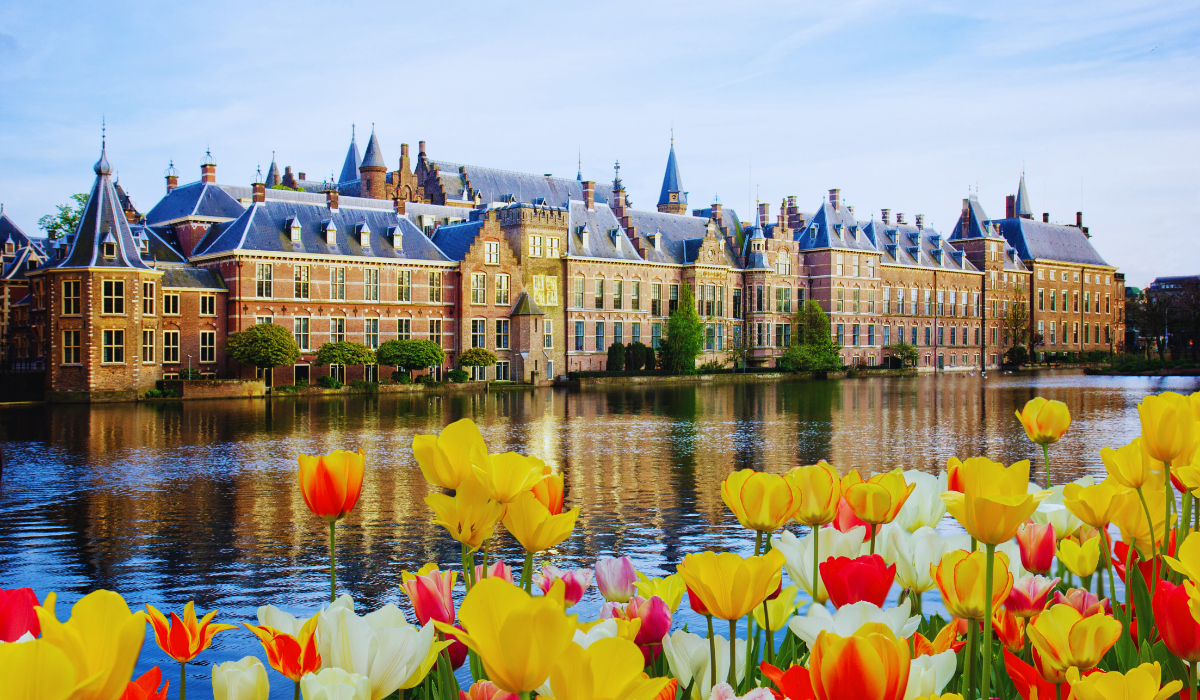
The entire country serves as a single constituency for elections. There are 150 seats in the House of Representatives (Tweede Kamer). There are 20 electoral districts (“kieskringen”) for candidate lists. Still, seat allocation is based on the national vote total, so a vote in Groningen carries the same weight as one in Zuid-Holland, meaning the entire country is a single constituency. All 150 seats are allocated based on the national total and are divided according to the percentage of votes each party receives nationwide.
0.67%: The Magic Number
In some countries, instead of having just one nationwide constituency, they have multi-member constituencies in regions. In Germany, Poland, and Slovakia, the threshold to enter the Parliament is 5%. But here, that number is 0.67% of the national vote to secure a seat. That is an exceptionally low electoral threshold, one of the lowest in the world.
Let’s break down where the 0.67% comes from. There are 150 seats. Therefore, the minimum share of the vote needed to guarantee one seat is 1 / 150 * 100% = 0.666…%, rounded to 0.67%. In the 2023 Dutch general election, a total of 10,475,203 people turned out to vote (77.7% of the population). The “electoral quota” (number of votes needed for one seat) was 10,475,203 / 150 = 70,240 votes. Only 70,240 people needed to vote for one party for that party to get a seat in parliament. Any party that crossed this threshold won representation. This is how a party like the Party for the Animals (PvdD) won 3 seats with 235,148 votes in the 2023 election (approximately 2.25% of the vote).
Now, imagine if the Netherlands had a 5% threshold, which means that to enter parliament, a party would need to receive a minimum of 5% of the national vote. 5% of 10,432,726 ≈ 521,636 votes, which is required to be considered for just one seat, instead of the current threshold of 70,240. It would mean only the largest parties would ever get seats.

Consensus and Coalition Politics
Due to this, forming a government can take a considerable amount of time: the record is 225 days, set in 2017. Party leaders negotiate to establish a coalition of parties that can agree on a majority (76+ seats), followed by a ‘regeerakkoord’ (governing agreement) detailing the policy plans for the entire term. While the governing coalition is stable, the parliament remains, to a large extent, fragmented. Consequently, the government finds itself having to negotiate legislation with its own coalition parties and dealing with opposition parties on issues.

The Polder Model
Let’s dive into a bit of Dutch history. There are a couple of key historical concepts that drive Dutch politics; the first is pillarization, which is now mostly defunct. Pillarization shaped Dutch life into the 1960s–70s across Catholic, Protestant, Socialist, and Liberal pillars. Up to the 1960s, the Dutch society was vertically inclined into different socio-religious groups, or “pillars” (Dutch: zuilen): Protestant (Calvinist), Catholic, Socialist (Social-Democrat), and Liberal (Conservative-Liberal). Each of these pillars had its own political party, newspapers, broadcasting associations, schools, sports clubs, and trade unions.
It was this compartmentalization above that ensured the adoption of the proportional system, so that each pillar could be equally represented. Though society has become secularized and the pillars have dissolved, the party system is a direct descendant of them, hence the continued fragmentation along the old ideological lines.
The second is the polder model. Because no party can rule on its own, a culture of negotiation and compromise has become deeply ingrained, and it is known as the “Polder Model.” Dike-building and running the Netherlands aren’t things you can do on your own. While countries like Germany, Switzerland, and the Nordic countries are known for their consensus politics, the Dutch “Polder Model” constitutes a firm cultural and historical reference. The necessity for coalitions, which is a consequence of the electoral system, is paired with an ancient tradition of culture and compromise and arrangements instead of winner-take-all politics. This, in turn, will end up influencing labor relations and negotiations in business. From business negotiations to labor relations, Dutch society is shaped by this model. Finding a solution that everyone can live with is the key.

The Diverse and Fluid Party Landscape
Unlike in the US or UK, Dutch politics is not a two-horse race, but rather a constantly crowded field. The prominent parties are:
- Christian Democrats (CDA)
- Socialists (PvdA)
- Conservatives (VVD)
- Progressive Liberals (D66)
- The Right (PVV, FVD).
- The Green Left (GroenLinks)
This system ensures that even minority views get a seat at the table.
The Voting Process
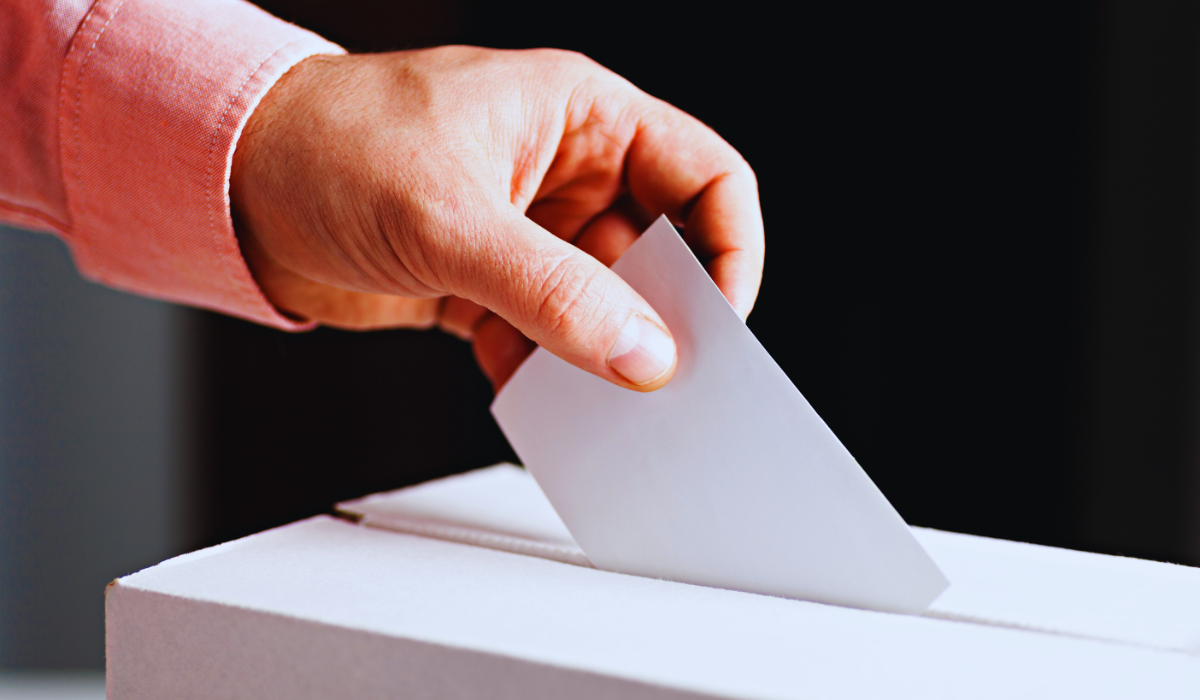
The voters in a Dutch election vote for one individual candidate on a party list. The candidate who obtains enough ‘preference votes’ (at least 25% of the electoral quota) jump over others on the list to gain a seat. The remaining seats are then allocated according to the order of the list. This culminates in a system with an ultra-low threshold, which results in a multi-party system based on the 15-20 parties in parliament.
The system allows for the rapid rise and fall of new parties, making the Dutch political system very dynamic. A party forming one election can become the leading player in the next. The system can give a voice to even the smallest of minorities in reflection of the country’s historical-cultural diversity. National elections for the House of Representatives take place once every four years at the most.
After an election in 2023, 15 parties entered the Tweede Kamer. That is quite a high number in European terms. While in some European countries coalitions are needed, usually either one or two parties, the so-called anchor parties, are almost always present in the governments (e.g., CDU/CSU in Germany, SAP in Sweden, Social Democrats in Portugal), but that is not the case for the Netherlands where the three traditional big parties (VVD, CDA, PvdA) have been seeing their share of the vote drop sharply with a resulting level of unpredictability.
This system opens the door for drastic changes, e.g., the New Social Contract (NSC) winning 20 seats in its first-ever election in 2023.

What This Means To You As An Expat
The Dutch political system is complicated, especially from an expat perspective, with all the coalitions endlessly forming and dissolving; with the fragmentation of the party landscape; and with the never-ending search for compromise. But that very design is what makes the Dutch society so stable, fair, and inclusive. Since no one party can dominate on its own, a wide range of voices—big and small, left and right, urban and rural—actually get to be heard inside the Parliament.
Policies are made by consensus, so harsh, abrupt swings and extreme policies are rarely seen. This culture of bargaining goes further: it shapes negotiations in the world of business, trade union relations, and even social life on the street. For both locals and expatriates, this means an environment that is brimming with diversity yet maintains stability, placing the Netherlands high on the list as an exciting democracy to study and an excellent place to live. This design, which empowers everyone to have a voice, creates an epicenter for social progress.
The Netherlands Is Home To Political Firsts
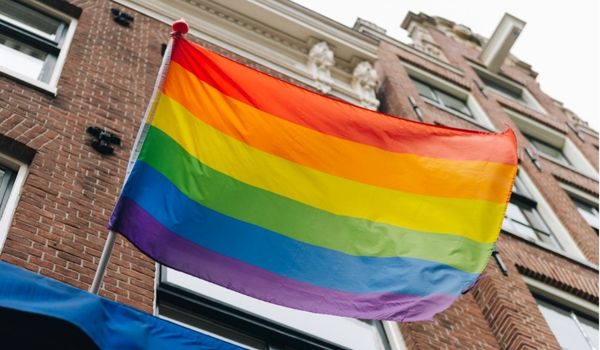
By allowing minority voices a greater say than would be permitted in a two-party system such as the UK or the USA, and demanding a far-reaching consensus, the Dutch electoral system has been able to draw attention to issues that would likely have been overlooked. This is why the Netherlands became the first country ever to fully legalize gay marriage in 2001, well before it was politically possible elsewhere in the world. This is also why parties like GroenLinks and the Party for the Animals, the first animal-rights party to obtain seats in any parliament, won decisive debates over climate action, sustainability, and animal welfare.
In a parliament where even small groups can claim a fair share of seats, new ideas are tested, negotiated, and often accepted. Rather than being a stumbling block, this proportional representation and coalition-building model of the Netherlands has earned the country a reputation for pragmatism, boldness, social innovation, and inclusion, one of the key reasons the Netherlands consistently ranks second on quality of life rankings.