
The Wealth Management Guide for American Expats
Categories: Finance,Latest News
The combination of US, EU, and Dutch law complicates financial planning for US expats. The following article offers useful information on investments, insurance, general financial planning, how to make the most of both countries’ laws, and how to overcome any messy hurdles that stand between you and your money. Special thanks to Impact Financial for helping us with this article

Your cash
Protecting your cash value involves understanding governmental protections and managing currency risks.
Governmental protections exist for cash amounts, such as the FDIC (US) and the Dutch National Banks. If your cash exceeds those thresholds, consider investing in cash-like securities like money market funds to spread risk. For more information on Dutch banks, see this overview and an income tax calculator.
Regarding fees and currency swings, be wary of transactional costs, including fees and spreads (the difference between the market rate and the rate you receive). It’s sensible to plan for currency movements to minimize risks such as currency swings that can impact your finances, especially when planning significant purchases like a home.

Insurance
As a key element of financial security, insurance requires careful attention to coverage details. Many U.S. policies won’t protect you while you’re abroad, and many international policies don’t apply in the U.S., so it’s crucial to know when and where you’re insured.
While US life insurance can continue coverage while abroad, you must be physically present in the US to purchase the policy. This is something you may want to plan for while in the US, as US policies often have better rates and avoid taxes and complexities that non-US policies face.
If abroad, non-US term policies (without underlying investments) avoid a number of issues but can still trigger the need for an additional tax form.
And be sure not to overlook employer-sponsored benefits either. Even these benefits are subject to US reporting, which can carry heavy fines if missed.

Estate Planning
Planning your estate is especially important to Americans abroad, as American documents are not universally accepted outside the United States. In the Netherlands, for example, you will need both American and Dutch documents for everything to transfer as intended. If you do possess a trust in the United States and are moving to the Netherlands, it would be advisable to have an attorney who does estate planning review it and make adjustments based on your new residency.
The adage, ‘Failing to prepare is preparing to fail,’ applies when planning your estate. Estate taxes can get high when you’re not prepared. US citizen spouses and non-US citizen spouses enjoy dramatically different estate exemptions. There is an unlimited amount you can transfer to your US citizen spouse, free of US estate tax. If, though, you transfer to your spouse, who is a non-US citizen and a nonresident, the exemption limit is only $60,000. This discrepancy has the potential to impose significant tax burdens on international couples, as the estate tax rates get to 40% in the US fairly quickly.
The Netherlands also has an estate tax rate up to 36% and other countries, like France, have even higher rates.
And don’t forget about your US state either. There can also be state estate taxes to plan around, with different limits.
Given the different levels of tax and complexities, it is highly recommended that you work with professionals aware of these global estate planning issues. Having a solid plan gives peace of mind, knowing that your assets go where you want, while avoiding tax burdens.
And once your plan is in place, periodic reviews and revisions remain important as your life and laws change.

Retirement Income & Savings
Precise years worked and proper tax planning are required by self-employed persons with American and Dutch taxation. Dutch self-employed professionals (zelfstandige zonder personeel, or “independent with no staff”), or zzp’ers as they are known, need to account for periods worked so that the state pension (AOW) is correctly accrued, with a requirement of 50 years of contributions to achieve a full pension. They must file American tax returns (Form 1040, Schedule C) to report foreign self-employment income and reconcile social security contributions, using the treaty between the Netherlands and the United States to avoid double taxation.
Key considerations include:
-
Tax arrangements and special regulations: The 30% ruling (30% exemption on income taxation in the Netherlands for expats) and the Dutch-American Friendship Treaty (DAFT) are extremely advantageous. Combining the 30% ruling and the application of DAFT (for company establishment) can maximize tax results for American business individuals.
-
US account consequences: Roth Individual Retirement Accounts (Roth IRAs), retirement savings contributed with taxed dollars, lose their tax-free status in the Netherlands and would be taxed annually under Box 3 wealth tax.
-
Capital gain inequality: The Netherlands does not tax capital gains on individuals (at the time of writing – these are proposed), but American citizens must still report all their worldwide gains to the Internal Revenue Service. This may make taxable accounts a better choice than retirement accounts.
Pre-relocation strategic Roth IRA distributions may avoid liability for Dutch wealth tax but with potential penalties in the United States. Periodic reviews of cross-border plans before, during, and following relocation ensure alignment with evolving regulations and maximize long-term wealth planning. Always engage specialists who understand FATCA, PFIC regulations, and treaty provisions.
US Tax Filing for Expats
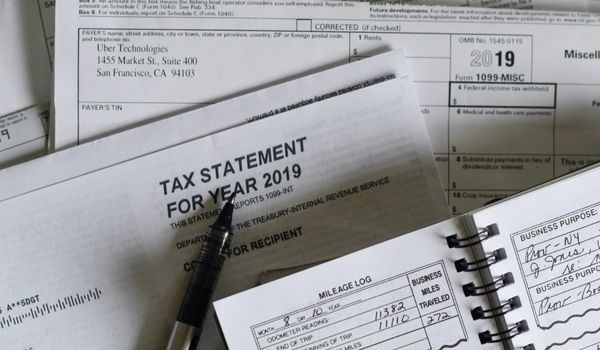
American citizens abroad are automatically granted a two-month filing grace period, moving the April 15 deadline to June 15. This, though, does not delay the payment date. If you owe US tax, you still owe on April 15, even if you get an automatic filing extension to June.
When planning your real estate sales, keep in mind that US taxpayers can exclude gains on their primary residences of up to $250,000 ($500,000 for married couples). But don’t delay, because this benefit could disappear if you wait too long after moving abroad to sell. For real estate investors, a 1031 exchange allows investors to defer capital gains tax upon selling a property but the property must be ‘like-kind’ – meaning you can’t use this strategy to exchange a US property for a non-US property.
And finally, see below for a summary of the common US tax offsets for expats:
-
Foreign Earned Income Exclusion: This sounds great, but the amount of income you can exclude is capped. The exclusion doesn’t cover all income, either; it only covers “earned” income (income from work). And there are some rules requiring physical presence or residency that make it difficult to qualify the first year that you’re overseas.
-
Foreign Tax Credit: The US will give you a US tax credit for income taxes paid to other countries. If you live in a country that has a higher tax rate than the US, you’ll likely completely offset your US tax (at least on the income that the higher tax country is taxing).
-
Foreign Housing Exclusion/Deduction: This is another option for offsetting US taxes on foreign-earned income. This is the least commonly used exclusion, though, as the other options are typically more favourable. If you have a low income and live in a high-cost-of-living location, this option may fit.
Be careful when alternately claiming FEIE and Foreign Tax Credit—you cannot claim both on the same income, and you must wait five years to be eligible to return to FEIE after having claimed Foreign Tax Credit.

Investing
US investment accounts and US-domiciled funds are often preferred for Americans abroad. First of all, US markets present many more options than in non-US markets. The US has 2 stock markets (NYSE & NASDAQ), which are both larger than any other global stock market.
The US also has a large number of mutual funds and ETFs with high trading volume, making it easy to trade.
The scale of these financial markets also means investors can appreciate lower fees. On average, US funds have lower costs than non-US funds.
If that still wasn’t enough, the US also adds a very heavy tax on non-US investments, making them too cost-prohibitive for US taxpayers.

What you should look for when selecting a Financial Adviser
When selecting a financial adviser, there are many considerations. We’ve made this checklist to help.
-
Fiduciary obligation
A fiduciary has a legal obligation to put your best interests ahead of their own. It’s a high standard that not every advisor is held to and an important one to understand as you consider advisers.
-
Fee structure
Consider fee-only advisers who do not earn commissions, thus reducing conflicts of interest.
-
Independence
A standalone adviser can consider a broader range of financial solutions, unconstrained by product restrictions. Advisers who work at large financial institutions, on the other hand, may be limited to those proprietary solutions.
-
Cross-border expertise
An important one. With the sophistication in global finance, seek advisers with cross-border wealth management experience.
-
Collaborative approach
A good adviser should have a worldwide network of experts in various countries to provide specific requirements, such as purchasing property abroad.

The Importance of a US-Based Financial Adviser
Unsurprisingly, the EU and the US have differing financial regulations, and as an American citizen, you must comply with both.
It can feel overwhelming when there are two jurisdictions to worry about. Investing in European mutual funds can bring some surprises regarding US government penalties. It’s well worth talking to a US adviser who can navigate you around those traps. Armed with access to and knowledge of US investment opportunities, a US financial adviser can help where a European one may fall short.
Some US financial institutions have been known to freeze the accounts of foreign customers, which is a major inconvenience. Having a US adviser can help you navigate and avoid these issues. And a US advisor can provide access to US funds that would otherwise be restricted to EU residents under PRIIPs and MiFID II regulations. A caveat to these regulations is that if you are working with a US advisor, you can compliantly access US funds.
So there are some strong perks in working with a US advisor to help you navigate your cross-border needs.
For all your cross-border U.S. expat investment needs and questions, Contact Impact Financial for expert help!