5 Things You Didn’t Know About Amsterdam
Categories: Culture,Latest News,News from the Netherlands
How the Dutch capital went from decline to one of Europe’s most in-demand cities, according to author and journalist Marcel van Engelen
Amsterdam today is one of the most sought-after cities in Europe. Housing is scarce and expensive. The centre is packed with tourists almost year-round. International companies and talent continue to pour in. If you live there, you don’t need the statistics. You feel it every day, in the rent you pay and the crowds you navigate on your bike.
But it hasn’t always been this way. As recently as the early 1980s, the Dutch capital was heading in the exact opposite direction. People were leaving, businesses were closing, and entire neighbourhoods were falling apart. Few would have predicted the ensuing transformation.
I’ve spent years writing about how Amsterdam became the city it is today. Here are five things from its recent past that many newcomers never hear about.
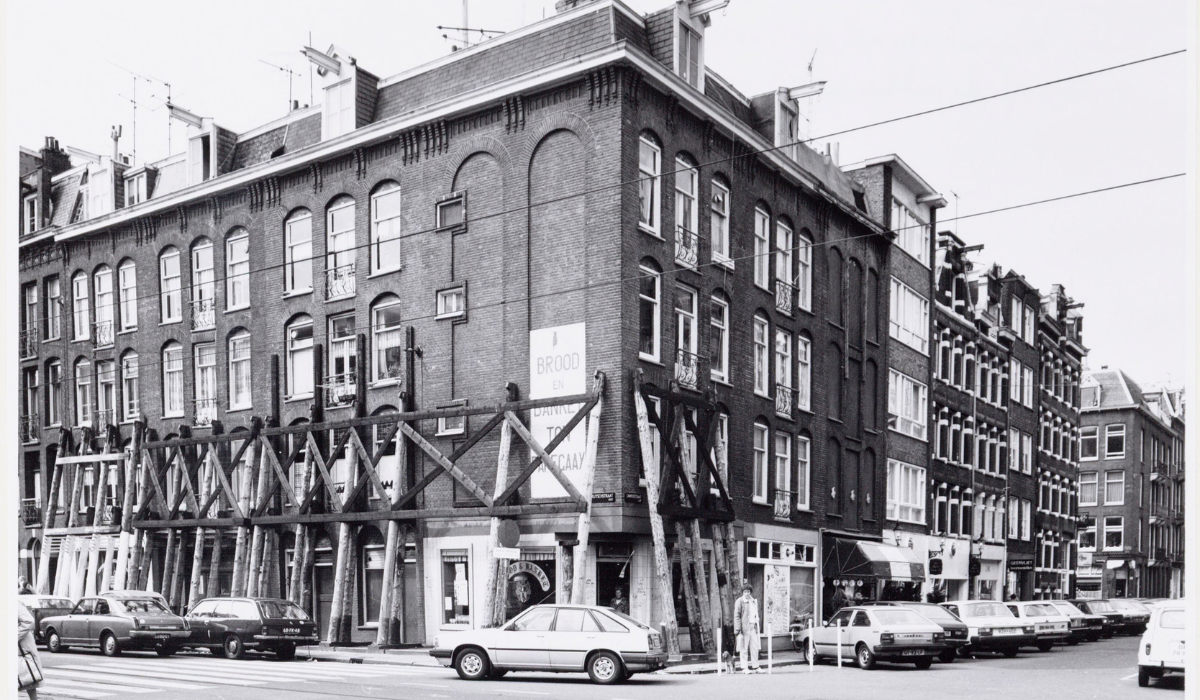
Houses in the east of Amsterdam, 1983
1. The City Was Falling Apart
The years around 1980 marked Amsterdam’s postwar low point. The problems were piling up. The city had been losing residents at an alarming rate since the 1960s. Families in particular were leaving for new suburbs in towns like Purmerend and for entirely new towns like Almere. Factories and shipyards had closed, unable to meet environmental regulations or compete internationally. Offices were abandoning the city centre, which was choked with car traffic. There were some ten thousand heavy heroin users on the streets, bringing a wave of petty crime: car break-ins and muggings. Thousands of old houses, commercial buildings and former factories had been taken over by squatters, whose alternative culture defined the atmosphere of the inner city. Clashes between squatters and police became national news. Amsterdam was a place of decay, economic decline and mounting social problems. Many had written the city off. At the very least, its future looked bleak.
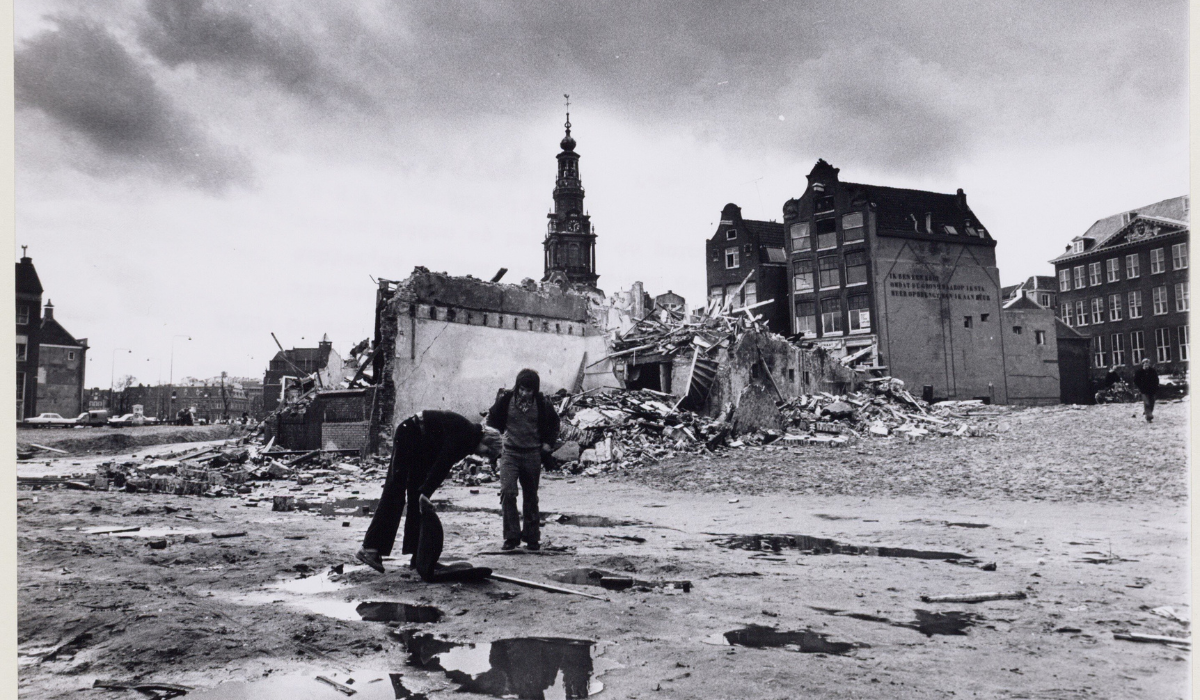
The Nieuwmarkt area, 1975; PC: Stadsarchief Amsterdam / ANEFO
2. Large Parts of the Old City Were Slated for Demolition
Amsterdam was not alone: many Western cities hit a low point around the same time. What’s often overlooked about Amsterdam is how bad the city’s physical state was. Historic canal houses stood propped up by wooden beams to keep them from collapsing. The old working-class neighbourhoods right in the heart of the city — like the Jordaan and the Nieuwmarkt area, both well-known today for their restaurants and markets — had fallen into serious disrepair. So had the districts in the nineteenth-century ring around the city centre, such as De Pijp, the Staatsliedenbuurt in the west, and the Dapperbuurt in the east. They had been left to deteriorate for decades. The city government’s response was radical. The prevailing belief was that these old houses simply couldn’t meet the demands of modern life, so they had to be torn down. The Jordaan and the Nieuwmarkt area were to be razed. Nearly the entire nineteenth-century ring was to go.
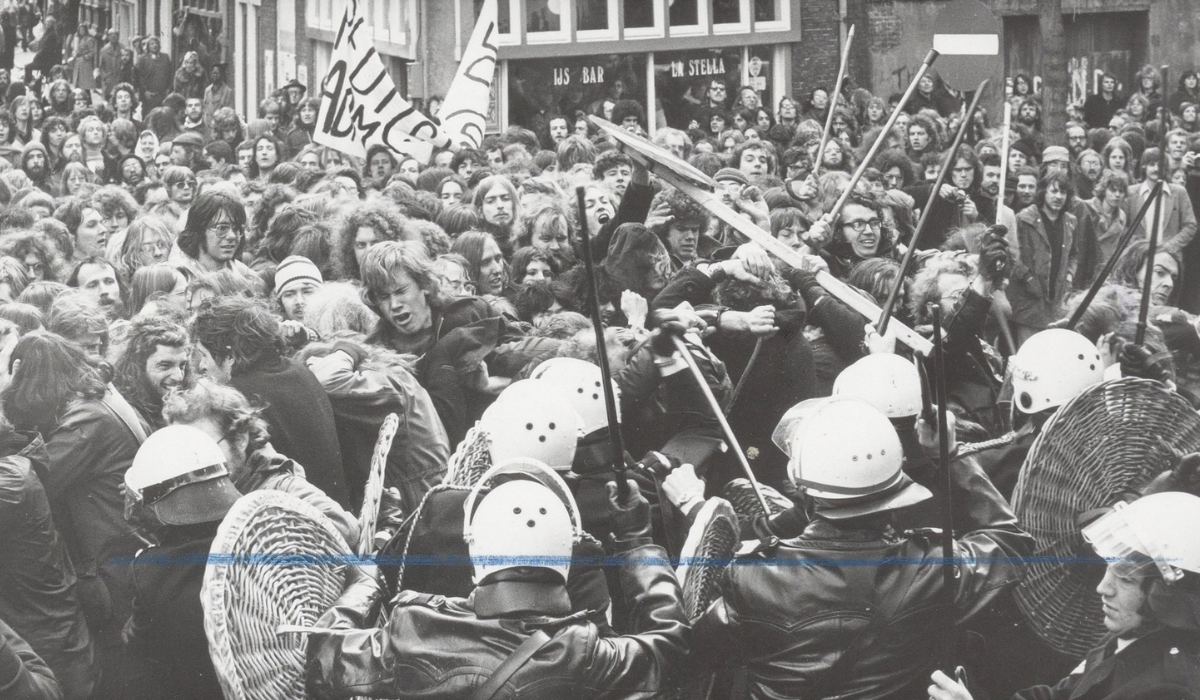
Protesters clash with police during riots in the Nieuwmarkt neighborhood, 1975; PC: Stadsarchief Amsterdam / ANEFO
3. An Unlikely Alliance Saved Those Neighborhoods
Amsterdammers who fought back saved the central neighbourhoods that are now among the most sought-after in the city. It started with well-to-do heritage campaigners who stood up for the historic value of the old centre. They were soon joined by a growing wave of young baby boomers: students and idealists who were moving into the city in large numbers, drawn to the old working-class neighbourhoods precisely because they were lively, mixed and walkable, with shops, markets and cafés right around the corner. Why not renovate instead of demolishing? That question became the rallying cry of a growing opposition. The 1970s became a decade of battle over Amsterdam’s future. There were fierce confrontations with riot police in the Nieuwmarkt area and the Dapperbuurt. But the activists gained support from other residents, civil servants, the press, architects, and members of the city council. Then, in the early 1980s, a new generation took charge and set a new course: the “compact city”. It was based on preserving old neighbourhoods and mixing housing, work and leisure. Amsterdam still follows that model today.
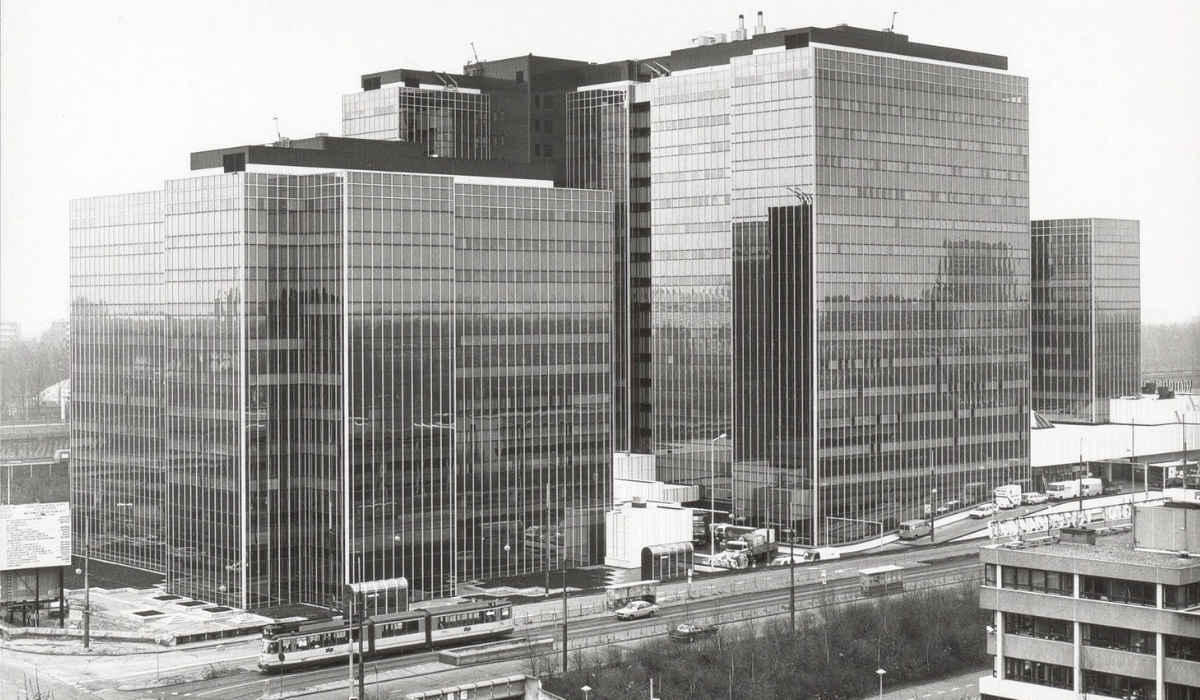
The World Trade Center (WTC), one of the first major buildings on the Zuidas, 1985 / Capital Press & Photo Productions BV
4. The Business District Was Supposed to be Downtown
If you work on the Zuidas, you probably think of it as an established fact of Amsterdam life: the corporate heart of the Netherlands. But the Zuidas was never the plan. For decades after World War II, city officials wanted to build a modern business district right in the historic centre, inspired by London’s City and by the downtowns of major American cities. That idea was killed by the same coalition of heritage campaigners and young activists who saved the old neighbourhoods. The city then shifted its attention to the IJ waterfront near Central Station. The star architect Rem Koolhaas drew grand designs. But the business community wanted to be closer to Schiphol Airport, the motorway and an existing railway station in southern Amsterdam. Led by the newly merged bank ABN Amro, corporate Amsterdam effectively forced the city’s hand. The city only fully committed to the Zuidas in the late 1990s. Most of the area was built after 2005. The corporate skyline that defines Amsterdam today is barely twenty years old.
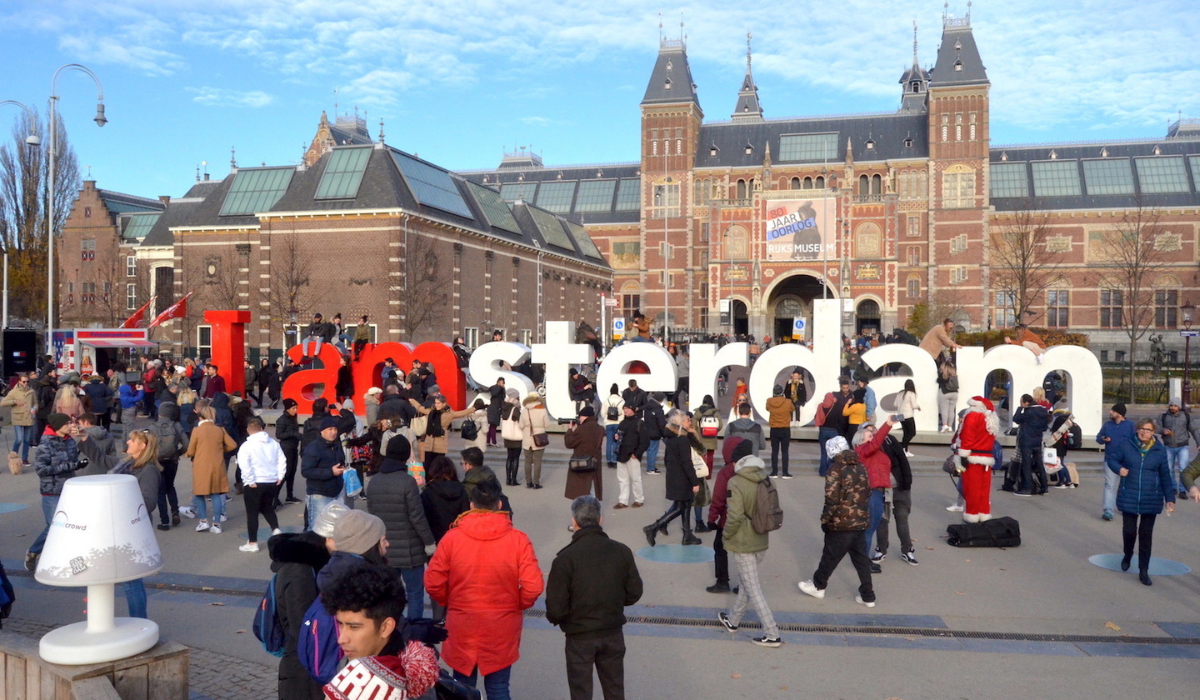
Tourists at Museumplein, 2018; PC: Eriksw, CC BY-SA 4.0 <https://creativecommons.org/licenses/by-sa/4.0>, via Wikimedia Commons
5. Its International Vibe is Surprisingly Recent
Walk into any bar or shop in Amsterdam, and you’ll be served in English. On the street, you hear French, Portuguese and Spanish. It can feel as if the city has always been this international, but it hasn’t. For most of the twentieth century, Amsterdam was an overwhelmingly Dutch city, with far less international diversity than today. That began to change in the late 1960s, when so-called guest workers arrived from Turkey and Morocco, followed by many Surinamese after independence in 1975. From the 1990s, economic globalisation brought American and Japanese companies to the city, and the European Union’s free movement of people added new groups of migrants. But it’s really only since around 2014 that internationalisation has taken off at the pace you see today. The expat community — largely from nearby countries such as the UK, Germany and France, from southern European countries like Italy and Spain, and increasingly from Brazil, India and China — would have been unimaginable just ten years ago.
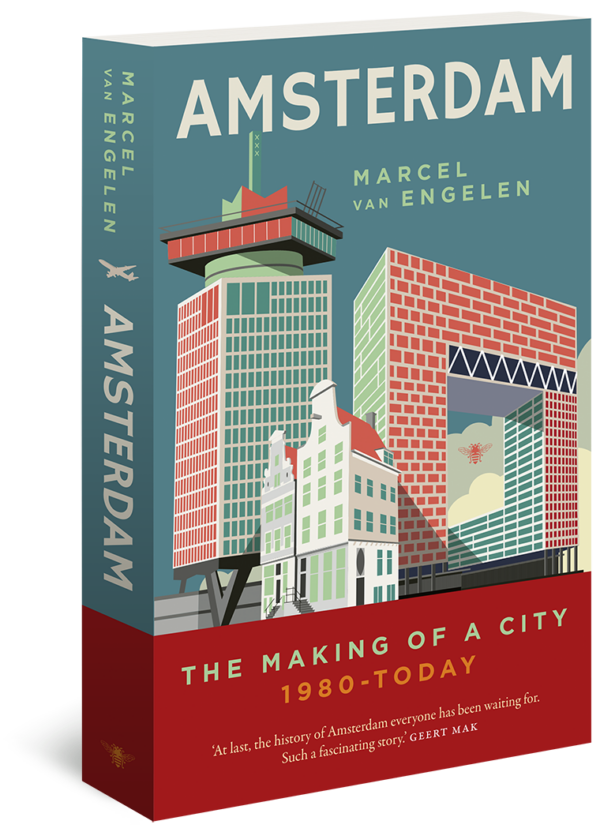
Marcel van Engelen is a journalist and author based in Amsterdam. His book, Amsterdam: The Making of a City, 1980–Today, came out in March 2026.