
Reading Your Dutch Utility Meters: The Meterkast And More
Categories: Housing,Latest News
Migrating to the Netherlands is every bit exciting and scary! But then, you must sort out the basics, like Dutch utilities, and grapple with this thing called a meterkast. This small, often cramped closet near your front door is the nerve center of your household, housing the devices that track your gas, electricity, and water consumption. Making sure these Dutch utility meters are read correctly is important because a wrong reading can leave you paying too much, paying too little, or dealing with a correction later.
The Importance of Accurate Dutch Utility Meter Readings
Meter data are extremely important in Dutch utilities. Your provider needs the right figures to calculate your bill properly. Without them, the company may rely on previous readings or estimate your usage based on household averages. That can easily work against you if you use less gas or electricity than expected, travel often, or simply keep a careful eye on consumption.
Here are some key moments when the meters should be read:
- Moving in or out, so you only pay for the period you actually used
- When changing providers, because they need start and end readings
- At least once a year, when annual readings are requested or checked
Finding The Meterkast
Basically, it is usually in a cupboard near the entrance and holds the meters for gas, electricity, water, and sometimes district heating or telecom connections. In apartment buildings, the meters may also be grouped together in a shared hallway or technical room, so always check that the label matches your flat number.
The Different Dutch Utility Meters In The Meterkast
There are four different meters in all:
- A gas meter, unless you have district heating through a heat meter
- An electricity meter, which may be traditional, digital, or smart
- A water meter
- A heat meter for district heating, sometimes with a separate warm tap water meter as well
First Up: The Gas Meter
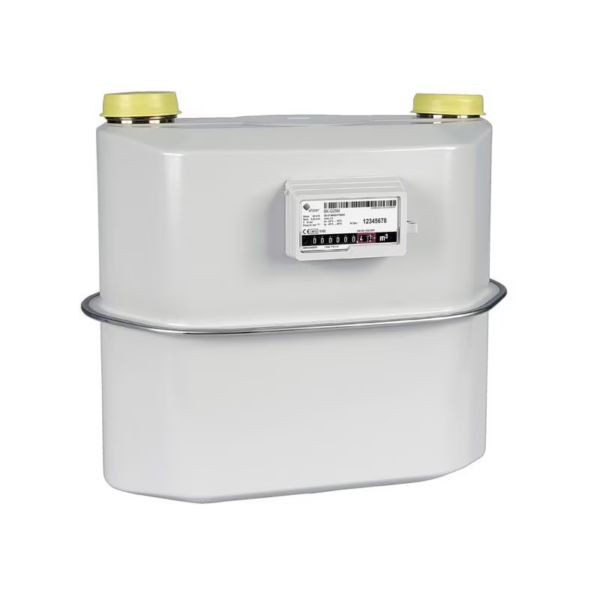
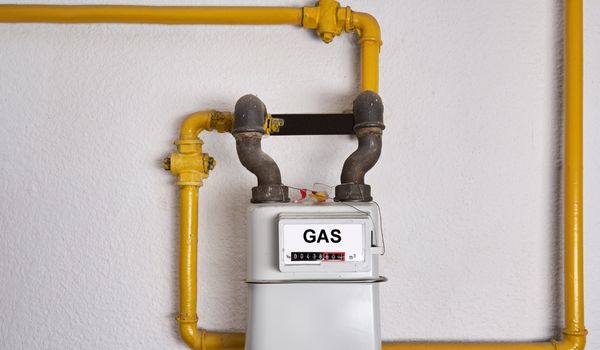
A gas meter is usually rectangular, larger than a water meter, and often has a metal casing, though newer ones may be made of plastic. It measures gas in cubic meters (m³). To read it, look at the display window and record only the digits to the left of the comma or decimal point. The smaller digits after the comma, often marked in red, are not normally needed. One useful trick is this. On a gas meter, the connections are usually on top. On a water meter, they are usually on the sides. That matters because people sometimes confuse the two.
Next: Electricity
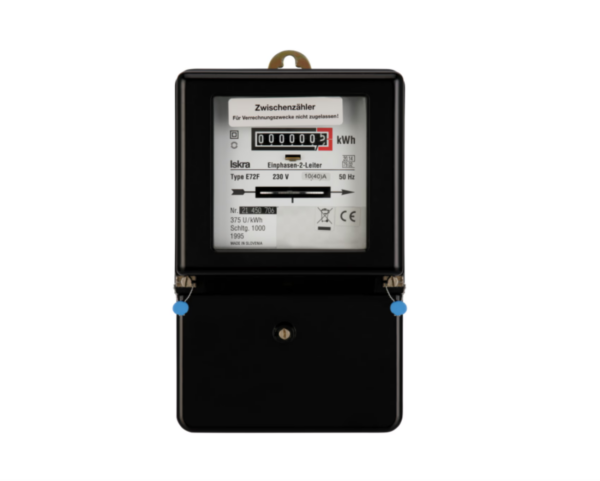
Electricity is a bit more complicated in Dutch utilities because it depends on your meter setup. In the Netherlands, electricity usage is measured in kilowatt-hours (kWh). The running figures on an electricity meter are often called telwerken, or registers. Some homes have one register, others have two, and digital versions can show up to four.
Traditional Meters
Electric Meter 1 Rate
The simplest version has a single-rate meter, featuring only one row of numbers. This means you pay the same electricity price regardless of the time of day. If you have this type of meter, record the digits before the decimal point and leave out any figures after it.
Electric Meter 2 Rates
Many households have a double-tariff setup, meaning the meter has two electricity rates.
- T1 usually records the low off-peak tariff, often nights and weekends
- T2 records the normal daytime tariff
The exact hours can vary by grid operator, but as a rule of thumb, T1 applies at night and on weekends, and T2 applies during the day on working days. On older two-register meters, T1 is often the upper or left register and T2 the lower or right register. Again, record only the digits before the decimal point.
Please note: Sometimes a meter shows two rows even though only one tariff is active. If you are not sure whether the second rate is in use, write down both readings today and check again tomorrow. If one line has not changed, that rate is not currently active.
Digital Meters
With this type of meter, up to four readings can be displayed digitally.
- T1 and T2 show how much electricity you consume
- T3 and T4 show how much electricity you feed back into the grid
For example, if you have solar panels and do not generate electricity, the T3 and T4 readings will usually remain at 0. Even so, note them down if they appear.
The Two Different Options For Display On Digital Meters (T1, T2, T3, T4)
Readings are shown one by one on some meters. Press the button to scroll through each reading. The relevant rate, such as T1, T2, T3, or T4, will appear on screen. Note down every reading, even if it is 0.
Other meters display multiple readings on a single screen. Next to each number, you will see the corresponding rate. Again, write down all readings, including any zeros. This is especially important if you send electricity back to the grid through solar panels.
(The Rise of) Smart Meters
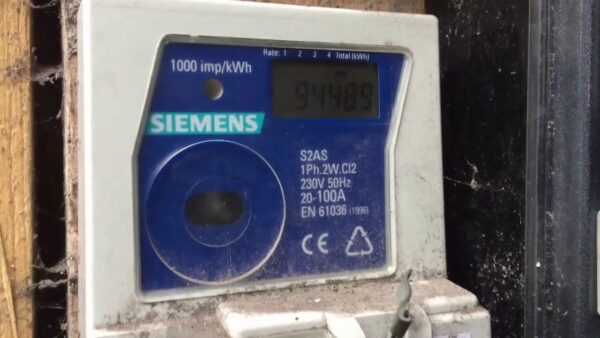
As the Netherlands moves toward a more digitized energy system, older mechanical meters are steadily being replaced by smart meters. If you have one, you will see an electronic display that cycles through different readings. At first glance this can be confusing, since the screen may jump between T1, T2, and sometimes T3 and T4. These last two are mainly relevant for households that generate electricity, usually through solar panels, and feed part of it back into the national grid.
Most smart meters have a button that lets you cycle through the display manually instead of waiting for it to scroll. If you want to check your readings yourself, note down every value shown, including zeros. That said, the key advantage of a smart meter is that your system operator can usually read it remotely and pass the data on to your supplier. In practice, this means you often do not have to submit readings manually at all. Still, it is worth knowing how to read the display in case of a connection issue, billing question, or move.
Now, The Water Meter
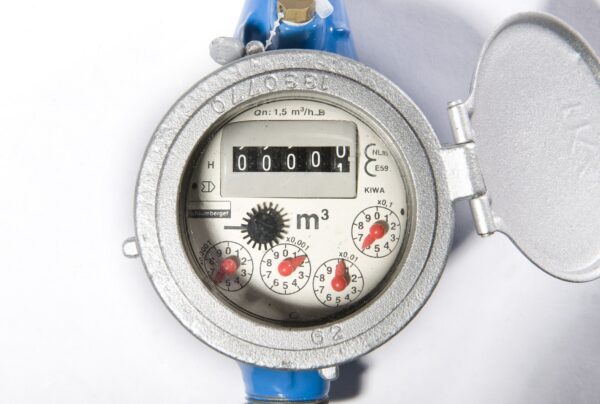
The water meter is usually round and often placed near the house entrance or under a small hatch just inside the front door. It also measures in cubic meters (m³), just like the gas meter, which is why the two are sometimes mixed up. The easiest way to tell them apart is by shape and connections. A water meter is smaller, usually round, and its connections are generally on the sides.
In most regions, the water company asks for the reading once a year. Usually, you only need to submit the whole cubic meters. If your provider asks for decimal places, include them, but otherwise the main figure is what matters. Water itself is relatively inexpensive in the Netherlands, but a leaking toilet or hidden pipe leak can push your bill up fast. Checking the water meter from time to time is one of the simplest ways to catch that early.
Lastly, District Heating
Some households receive stadsverwarming, or district heating, instead of gas. This means you do not have a standard gas meter but a heat meter, which measures your heating consumption in gigajoules (GJ). These meters are almost always digital and are often tucked away near the heat-exchange unit in a corner of the utility closet or under the floor. When reading a heat meter, include the decimal places, as they are important for calculating your thermal energy usage.
In some district-heating homes, warm tap water is measured separately as well. If that applies to your home, you may see a separate round tap water meter. Unlike a gas meter, the decimal places here can matter, so check the supplier instructions carefully before submitting the reading.
Meterkast Tips for Expats
Having a torch or using the flashlight on your phone makes it much easier to read the meters, especially in a dark cupboard or shared hallway. For documentation, take clear photos of all the meters. It is faster than writing everything down and gives you solid evidence in the event of a billing dispute. If you are unsure about an electricity reading, note it now and check it again the next day.
If you are in a new place, ask the landlord or neighbours where the meters are located. In many apartment blocks, all the meters are grouped together in a shared meter room or hallway, so make sure your own meter is clearly labelled with your apartment number before recording anything.
All this may seem overwhelming at first. With some knowledge of meters, you can keep your home’s costs under control. If you can read your meters properly, you are far less likely to rely on vague estimates and far more likely to keep your bills predictable. Partners like PartnerPete and Utility Direct specialize in helping expats set up their electricity, gas, and water connections without unnecessary headaches.