
An Expat’s Guide to Traditional Dutch Meals
Categories: Food and Drinks,Latest News
Food can be one of the best ways to connect with a culture. The Netherlands is no different! At first glance, Dutch cuisine may appear basic and limited. But, this isn’t the case! Dutch food is simple, hearty, and shaped by the country’s farming history and links to the sea. While the Dutch may not be famous for fine dining, their traditional meals are full of comfort, flavor, and unique charm. Plus, they have given rise to some modern twists, especially in the snack department.
From sweet breakfasts to cozy dinners, we have you covered with an overview of the traditional Dutch meals you need to try.
Breakfast (Ontbijt)
Traditionally, Dutch breakfasts are usually light and sweet, often gobbled before heading out. But it can be fun, especially for children and the young at heart.
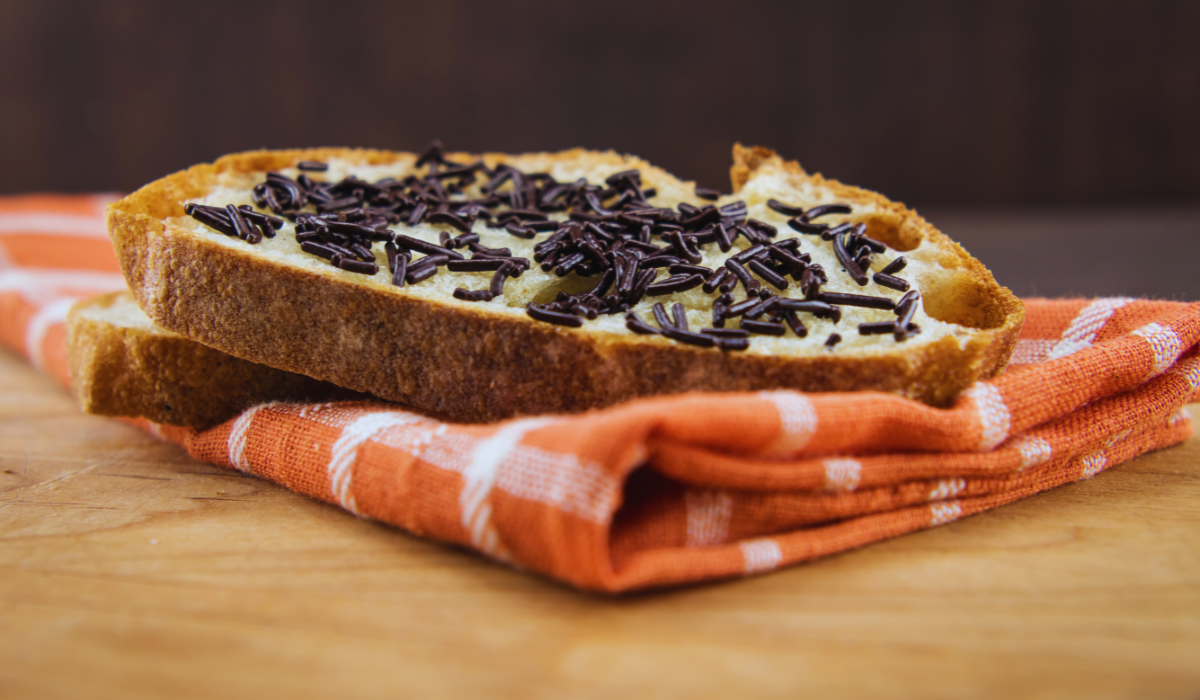
Hagelslag (Chocolate Sprinkles on Bread)
Yes, Dutch people really eat chocolate sprinkles on bread for breakfast! It’s a slice of buttered bread topped with “hagelslag” – sprinkles made of chocolate or fruit-flavored sugar. Kids love it, but many adults enjoy it too. Hageslag comes in a dizzying variety of flavors and colors, so it’s the perfect way to brighten up your morning.
Ontbijtkoek (Breakfast Cake)
A spiced cake made with rye flour, honey, and spices like cinnamon or cloves. It’s usually served sliced with butter. It’s slightly sweet and great with coffee or tea. The name literally means breakfast cake – it couldn’t be more perfect.
Boiled Eggs with Bread
Not strictly unique to the Dutch is this real classic. Good proteins provide the perfect start to the day. How you serve this is your choice, whether soft or hard-boiled eggs served with bread, butter, and often cheese. Spice it up even more with some ham, and you have the makings of a proper continental breakfast.
Yogurt with Muesli
Another classic that has risen in popularity. Many Dutch people eat a bowl of yogurt or “kwark” (a thick dairy product similar to Greek yogurt) with muesli, fruit, or honey. It’s a healthy and filling alternative to sweeter options.
Cheese and Bread
Perhaps the most traditional and the most stereotypical breakfast choice. It’s true that the Dutch love their cheese. A slice of bread with jong (young), belegen (mature), or oud (old) cheese, and you’re set for the day!
Lunch (Lunch)
Like breakfast, lunch in the Netherlands is often quick and bread-based. It’s not a big hot meal like in some countries, but there are still some fun dishes to explore. We could technically have a whole section on broodjes (sandwiches), but we think you get the idea. Essentially, anything on bread is fair game in a Dutch office.
Broodje Kaas (Cheese Sandwich)
Need we say more? Simple and popular. It’s just bread with cheese. Sometimes butter, lettuce, or mustard is added, but this is often considered decadence.
Broodje Kroket (Croquette Sandwich)
This straddles the line between snacks and traditional food. A broodje kroket is a soft bun filled with a hot, deep-fried croquette made from meat ragout. You’ll find this in almost every Dutch cafeteria or train station, and it is now seen as a more recent addition to truly traditional dishes.
Uitsmijter (Open-Faced Egg Sandwich)
Now we are getting to the real traditional lunch options. This hearty dish is made with slices of bread topped with fried eggs, ham or cheese, and sometimes pickles or salad on the side. Often, they are larger than you may expect, so they make a great brunch option!
Pannenkoeken (Dutch Pancakes)
Thinner than American pancakes, but thicker than crêpes. They can be sweet or savory and are often eaten at lunch in pancake restaurants. Many Dutch people also eat pannenkoeken for dinner. They come in all kinds of varieties, from sweet and indulgent to hearty and coated in toppings.
Erwtensoep (Pea Soup)
Though often served for dinner, thick pea soup is sometimes eaten as a warming lunch. It’s filled with split peas, sausage, and vegetables. This is a real winter dish, and some regions have traditional days when the first erwentsoep is eaten of the season!
Hollandse Nieuwe (Soused Herring)
An acquired taste, herring is soused or pickled in barrels before being served whole, topped with raw onion and occasionally pickles. This is an authentic Dutch tradition, and you’ll see them being devoured at markets at the right time of year en masse.
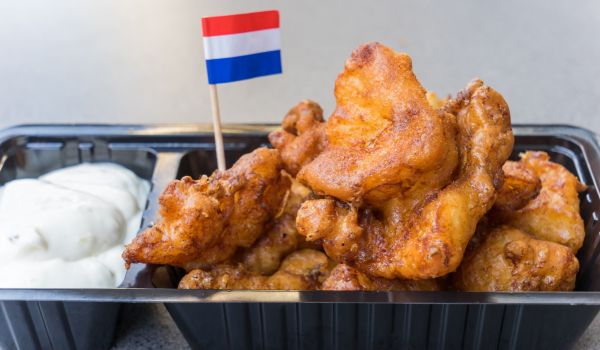
Kibbeling (deep-fried fish)
More palatable for most than Hollandse Nieuwe is kibbeling. These tasty, deep-fried chunks of white fish, usually cod, are coated in a unique blend of spices and served with remoulade sauce. The perfect lunchtime snack!

Dinner (Avondeten/Diner)
Dinner is usually the biggest meal of the day in the Netherlands. Traditional Dutch dinner meals are warm, filling, and often based on potatoes and vegetables. Seafood is more common close to the Dutch coastline, and regional dishes vary across the country.
Stamppot
A classic Dutch dish made by mashing potatoes with vegetables like kale (boerenkool), carrots (hutspot), or sauerkraut (zuurkool). It’s usually served with smoked sausage (rookworst). Again, this is a classic dish often served during the colder months of the year.
Hachée
A slow-cooked beef and onion stew with bay leaves and cloves. It’s served with potatoes or red cabbage. Another hearty warming dish, Hachée is believed to have originated in medieval times, and has become synonymous with Dutch oven cooking.
Zuurvlees/stoofvlees
Another tasty, spiced stew, zuurvlees (sour meat), is a hearty, thick, slow-cooked stew often served with fries. Zuurvlees is traditionally made with onbijtkoek and mustard, giving it a rich, spiced taste. It’s a popular traditional dish in the south of the Netherlands and parts of Belgium.
Kapsalon
A modern tradition and a street food favorite, especially late at night! A kapsalon (also the Dutch word for a hairdresser) consists of fries topped with döner meat, cheese, and salad, then baked in the oven. It’s packed with calories and is perfect for soaking up traditional Dutch beers.
Bitterballen met Friet
Though more of a snack, some people enjoy bitterballen (deep-fried meatballs) with fries for a casual dinner. Indeed, a traditional Dutch dinner for many families is friet met snacks on a Sunday afternoon. This usually consists of kroketten, frikandel, bitterballen, and anything else deep-fried, crunchy, and delicious.
Mosselen (Mussels)
Like in Belgium, mussels are a popular Dutch dinner. They’re cooked in white wine or beer with herbs, and often served with fries and mustard mayo.
Snacks (Borrelhapjes)
The Dutch love a “borrel” – a casual drink with friends, often paired with snacks. These are common at bars or home gatherings. While many aren’t traditional in the old sense, they are now synonymous with Dutch culture and cuisine. The idea of a borrel is an authentic modern Dutch tradition!
In a Dutch snack bar or automatiek, you’ll find a staggering variety of snacks. Some are more modern twists, while others are tried and tested over generations.
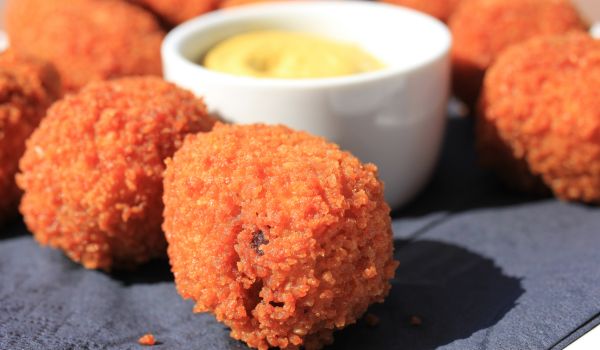
Bitterballen
As previously mentioned, bitterballen are the ultimate Dutch snack. Crispy on the outside, soft and savory inside. These fried meatballs are served hot with mustard and are a must-try.
Kaasblokjes (Cheese Cubes)
Did you think we were all cheesed out? In a borrel, Dutch cheese comes into its own! Here, small cubes of Dutch cheese, whether jong, belegen, oud, or something fancier, are served with mayo, mustard, and pickles.
Ossenworst
This is a real classic. Traditionally made from ox, today this raw beef sausage is often sliced and served cold as part of a borrel platter.
Vlammetjes
Spicy and often full of molten innards, a vlammetje is a small deep-fried parcel filled with meat, served hot with dipping sauce.
Frikandel
Another classic, along with friet and bitterballen. Frikandel is a skinless sausage, often deep-fried and eaten with curry ketchup or mayo. You’ll find it at snack bars and parties. It’s best not to ask what’s in it.
Friet (Fries)
Another choice that straddles the line between snack and dinner is friet. Also called patat in the north, Dutch fries are served with a variety of sauces, ranging from mayo to satay sauce. A friet speciaal is an absolute classic. Friet, mayo, curry sauce topped with raw onion. Perfect!
Bonus: Two Dutch Drinks to Try
While our list has focused on Traditional Dutch meals, it’s also a country known for its beers and other drinks. We won’t go into details on the best Dutch beers. However, two Dutch drinks you should be aware of are Chocomel and Jenever. Chocomel is a chocolate milk drink hugely popular both with children and adults. It’s become famous worldwide, and is delicious both hot and cold!
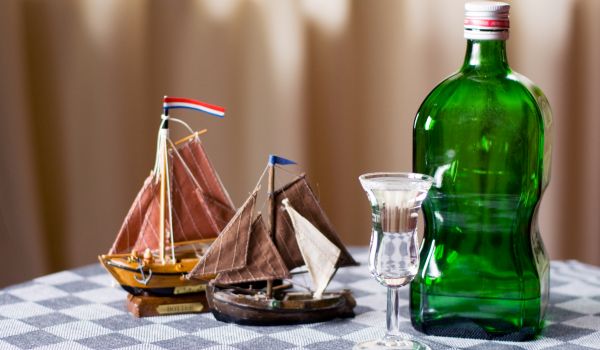
Jenever, on the other hand, is a traditional drink that’s certainly not for kids. Jenever is traditional Dutch gin, and is believed to predate gin as a drink. Indeed, it is believed the term ‘Dutch Courage’ refers to the practice by Dutch mercenaries downing jenever before battle in centuries past.
Hungry? We are!
Traditional Dutch meals may seem simple at first, but it has its own charm and comfort. As an expat, tasting local dishes is a great way to feel more at home. Whether you’re biting into a broodje kaas at lunch or warming up with stamppot on a cold evening, there’s always something tasty to enjoy in the Netherlands. Remember, there’s so much more than in our list! Try regional specialities, which range from specific cheeses and bread to entire dishes and even preserves.
Eet smakelijk! (Enjoy your meal!)