
What Is The Randstad, And Should It Be Made A Giant City?
Categories: Latest News
If you have been in the Netherlands for more than a week, you’ve undoubtedly heard about it. Perhaps you just nodded, wondering what on earth people were talking about. Here’s your quick crash course in geography lesson: The Randstad is the economic beating heart of the country, the cultural engine, an area where just shy of half of the Dutch population lives, works, breathes, and plays. The Randstad region encompasses the four major cities: Amsterdam, Rotterdam, The Hague, and Utrecht, along with their respective smaller towns, such as Haarlem, Leiden, and Delft, among others.
The burning issue for any expat is: Should the Randstad be made into one massive city, interconnected on each level, and Europe’s answer to New York? Or remain a collection of fiercely independent urban centers that just happen to be neighbours? Let’s dive in and explore the pros and cons.

What Is The Randstad?
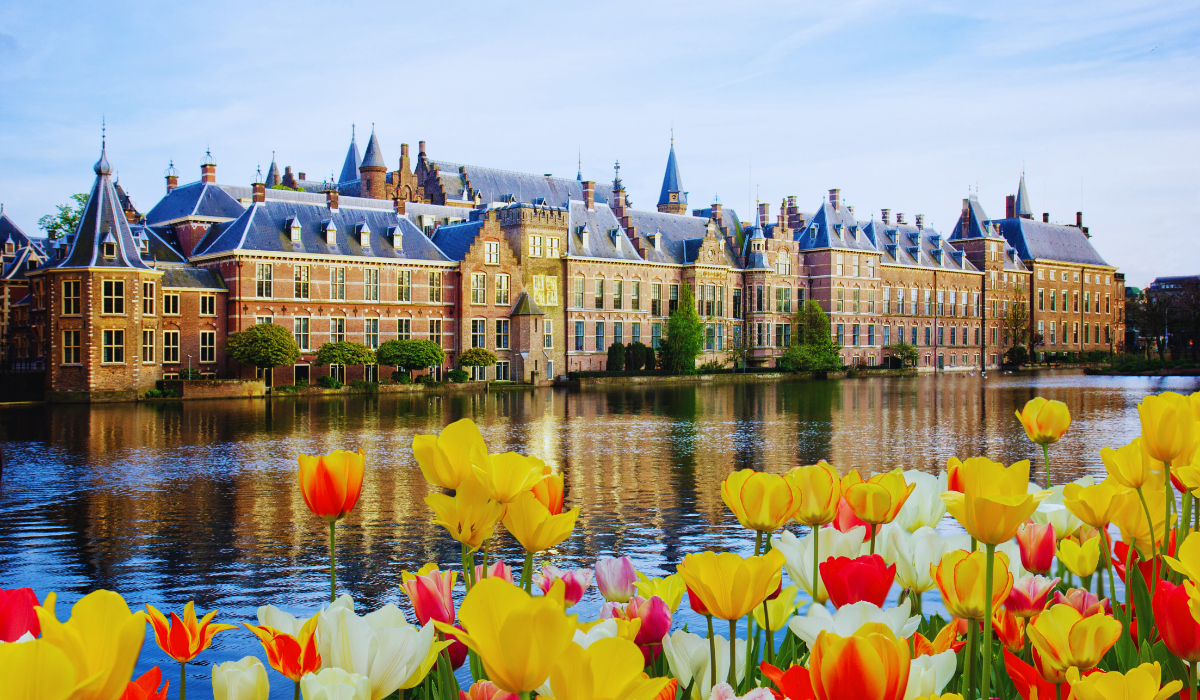
The Randstad is one of the most successful, purposeful, and conscious examples of polycentric urbanism in the world. It is a “network city.” A bit different from the classic “metropolis.” In this “network city,” you can live in the political capital (The Hague), play in the cultural and financial capital (Amsterdam), work in the maritime capital (Rotterdam), and be interconnected through the transport nexus of the country (Utrecht) in just one long ride. And in between? Well, that’s filled with glorious Dutch countryside, with sheep, cows, tulips and the like. This created a unique living experience. You can be in the bustling centre of Rotterdam, and within 20 minutes on a bike or train, find yourself looking at wide-open fields with grazing cows. This access to both intense urbanity and serene countryside is a key part of the Dutch quality of life that expats so often cherish.
This structure wasn’t the result of Dutch urban planning, but emerged organically over the 20th century. As cities grew, Dutch spatial planners made a conscious decision to prevent them from merging into one indistinguishable blob of concrete—a fate suffered by many large centers. Instead, they enforced “green buffers” between cities, preserving the Dutch polder landscape and waterways that define the country.

The Case FOR a Unified Randstad City: Efficiency and Global Power
Proponents of a unified Randstad region argue that the current fragmented model is hindering the region’s growth. Their case rests on a desire for world domination (let’s call it ‘global ambition’).
Administrative Inefficiency
The Randstad is a patchwork of dozens of municipalities, each with its own mayor, council, and local policies. Coordinating on region-wide issues, such as housing, transportation, and economic development, requires numerous meetings and compromise. In other words, a classic case of Dutch bureaucracy. A single metropolitan government could streamline decision-making and present a unified voice on the international stage. You can imagine the clout it would have.
Transportation and Infrastructure
For commuters facing rush-hour congestion and issues, these problems are a daily reality. A common transport authority, such as a transport equivalent to Transport for London, could orchestrate a transport network spanning multiple cities. Infrastructure projects on a major scale, such as the long-awaited expansion of Schiphol Airport in Amsterdam or the laying of new rail lines, could be considered and executed from a regional perspective rather than a more local one.
Global Competition In The Economy
Fun fact. The Randstad has a combined GDP of over €500 billion, which puts it in line with the top European economies. Imagine a unified “Randstad City,” which would effortlessly match London or Paris in terms of global investment, significant events, and “brand” awareness.
Dealing With The Housing Crisis
The housing shortage is a pressing issue for both Dutch residents and non natives. A unified housing market and a central planning authority prevent the inefficient allocation of resources and enforce policies and actions to develop affordable homes throughout the entire region, thereby preventing tactics where the strict guidelines of one municipality simply shift demand and problems onto the next.
The Case Against Unification: The Strength of Specialization and Identity
The main crux of the argument here is for diversity rather than homogeneity, and for collaboration rather than consolidation.
The Power Of Polycentricity
Why would you want to be another London or Paris? The Randstad’s strength lies in its distributed model. Each major city has its own unique character, history, and specialisation:
- Amsterdam: Finance, culture, tourism, creative industries.
- Rotterdam: Europe’s largest port, logistics, architecture, and a gritty, can-do energy.
- The Hague: International law, governance, peace and justice, cybersecurity.
- Utrecht: The geographical heart, a transportation hub, life sciences, and education.
This specialisation creates a powerful and resilient economic ecosystem. If one sector struggles in one city, the others can provide balance. It allows people to choose a lifestyle that suits them without sacrificing career opportunities. An expat lawyer might thrive in The Hague’s international environment, while a start-up entrepreneur might prefer Amsterdam’s buzz. Forcing these distinct identities into a single administrative blob would risk diluting what makes each city great. And variety is the spice of life, they say.
Protecting The Green Heart
Any formal unification of the area would put enormous pressure on the protected area, known as the Green Heart. The demands for housing and infrastructure development risk eroding these green spaces, which are essential to the region’s identity and livability. Not many world cities offer this.
Local Identity Is a Thing
Can you imagine Ajax and Feyenoord fans they’re now one city? Nope, neither can we. The Dutch take pride in their local background. A “Hagenees” (someone from The Hague) has very different identity connotations than an “Amsterdammer” or “Rotterdammert.” This civic pride shows cultural richness and an active citizenry. A top-down, heavy-handed branding of a “Randstad” identity would be spirit-crushing; it could easily wipe away whatever dynamism has come from the explicit competitive freedom of the municipalities.
The “Network City” is Already Working
If it ain’t broke, don’t fix it. Critics argue that the area already functions perfectly well without a central government. The rail network offers great connectivity. Businesses are already operating across the Randstad region, drawing talent from a single labor pool. In reality, people are living in one city and working in another. Forcing a formalized merger might just give rise to the bureaucracy it is meant to clear.

The Expat Experience: Living In The Network
For expats, the Randstad’s network model presents both advantages and disadvantages. One great advantage lies in the diversity of options it offers. You have the option of residing in the historic splendor of Leiden, the beachside ambience of The Hague’s Scheveningen, the contemporary energy of Rotterdam, or the international flair of Amsterdam. Social and professional engagements are not limited to one city center; the entire Randstad provides endless opportunities.
On the flip side, you may need to navigate multiple municipal websites during residency registration (gemeente), juggle different local tax regulations, and encounter the absence of a unified public transport payment method (at least with OV-chipkaart) to some extent.
You live in a country that values pragmatism and cooperation but fiercely guards local identity and a deep, intrinsic connection to its landscape. The Randstad is not a failure of urban planning that never became a “real” city. It is a visionary, if sometimes messy, success—a blueprint for how millions of people can live, work, and thrive in a metropolitan area without sacrificing their humanity, their green spaces, or their unique sense of place.